Kenya Public Transport

Kenya public transport refers to air, road, railway, and water transport–the means by which people get from Point A to Point B. Of course, not every mode is available to everyone.
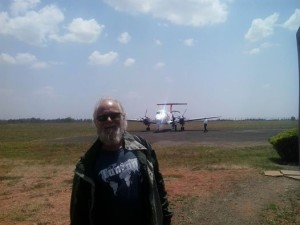
KDM's Glenn Roseberry, boarding a small aircraft for inter-Kenya travel
KDM’s Glenn Roseberry, boarding a small aircraft for inter-Kenya travel

Jomo Kenyatta International Airport, Moi International, and Wilson Airport are the leading public air transports in the East Africa region. These three airports link East African nations with each other and with  the rest of the world. Jomo Kenyatta International Airport, earlier known as Nairobi International Airport and Embakasi Airport, is the leading public air transport facility in the region. It serves daily an average of 19,000 passengers from Africa, Europe and Asia. The airport was named after Kenya’s first prime minister and president, Mzee Jomo Kenyatta.

There are also  airstrips that facilitate small aircraft, connecting the capital city, Nairobi, with other small towns: Kitale, Eldoret, and Kisumu airstrips.

Uganda Railways service was the major public transport in the region back in the  ’50s and ’60s. It was managed by East Africa Railways and  served Kenya, Uganda and Tanzania. After the dissolution of East Africa Region in the year of 1977, the nation of Kenya took over the management of the Uganda Railway and all of its local branches in Kenya. The most important line in Kenya runs between Mombasa and Nairobi. In many parts of the country you will see rail lines, but you will never see any trains. Railway transport is no longer available in many parts of East Africa. An interesting read in the public domain about the building of these railroads–relating the excitement and danger of running the lines through lands dominated by “the Big Five,” including some man-eating lions–is The Man-Eaters of Tsavo.

Kenya also has a major international port in Mombasa, serving both Kenya and Uganda. Lake Victoria is another big port, which has a ferry that connects Uganda and Tanzania. It is  only Mombasa that has a commercial port that reaches international standards. Mombasa’s commercial port is called Kilindini Harbor. Under the management of Kenya Ports Authority, it is located on the Indian Ocean.

Road Transport–not as Innocuous as it Sounds…

Of course, in our area, the masses are limited to road transport to get from point A to point B. If you live in the West, this sounds pretty innocuous–but let’s take a trip together and you’ll see a few differences in the way things happen here in Kenya.
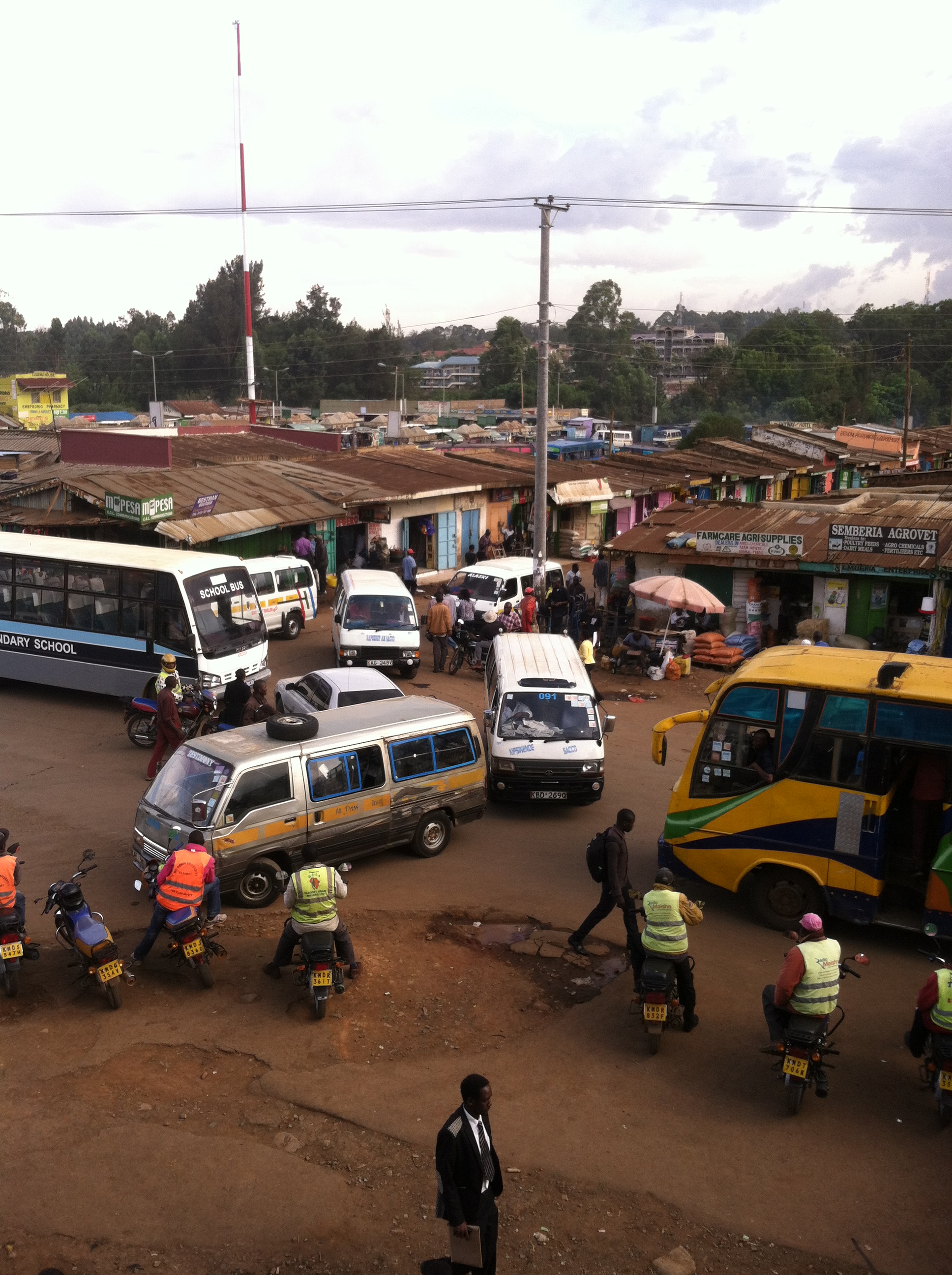
021Public buses and matatu (mini-bus) are the cheapest and most popular modes of transport in the cities and towns of Kenya. For those who cannot afford to own private vehicles or hire a private taxicab or rental car, this type of public transport remains the best and only option.

Public buses and local matatu provide both short and long distance travel. Buses are mostly found in the cities and major towns of Nairobi, Mombasa, Nakuru, Eldoret and Kisumu, while matatu are common in small towns and rural regions. Buses are often preferred, as they are much safer, quieter, more reliable, and trusted, compared to matatu, which are filled with loud music to attract travelers and have chaotic road schedules with frequent stops.

Buses and matatu provide express services between major cities and towns across the country. Often fare is paid on board. If you are making a long distance travel then you will  be required to do earlier booking, which can be done at the booking office before the day or time of travel. Buses carry many passengers compared to matatu, which is limited to not more than 14 passenger on each trips. (Of course, this is by law, but many carry more if they can get away with it.)

For many years, the matatu sector was known as the most dark and pathetic industry in the country. It had been linked with violence and reckless driving, resulted in many road accidents and  loss of lives–even  permanently handicapping some passengers who were fortunate enough to escape death. Other criminal activities have unfortunately been associated with the sector, such as mistreatment of the passengers, verbal and physical abuse, theft,  hijacking, sexual harassment, and even murder. At various points, government interventions have tried solve these various issues, but some challenges remain.

Boda-boda

Another reliable mode of local transport, particularly within larger towns and cities, and out in the villages, is boda-boda (motor-bike taxis). They often connect small towns with rural villages, where vehicles are scarce or even absent completely. They also provide a quick, cheap, and trusted means of accessing the most crowded and congested cities. Boda-boda industry has been a great blessing for many people by providing a source of employment for thousands  of young people in many African countries

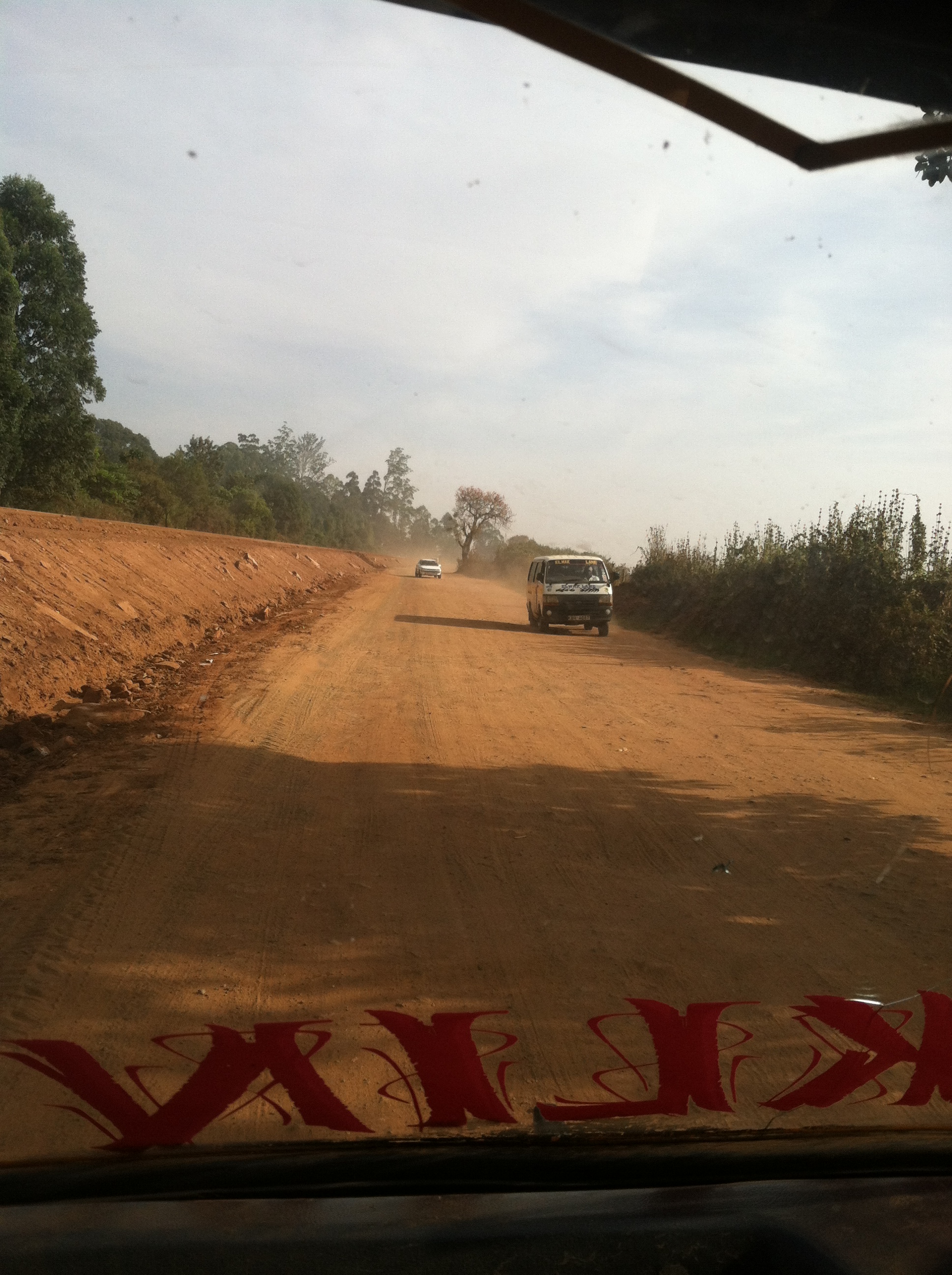
Public road transport in Kenya is one of the most exciting and intimidating experiences you can ever encounter in your  life time! This experience generates both fear, horror and delight in foreigner visitors. These vehicles all travel on rough roads full of potholes and random (unmarked) speed bumps.  Many of Kenya’s major roadways are under construction, with diversions slowing down travel in many cases. Travel by boda-boda in the villages is often on narrow paths, which are downright dangerous to navigate in rainy season. After your travel is over, you may find that you whisper to yourself, “My goodness, it was a nightmare–and  an exciting journey.” Getting around Kenya can be at once horrifying and challenging  for those travelers who are not used to driving in congested and crowded environments, or even rough, dusty, unpaved roads. For those who live here, though, it is an accepted part of everyday life, and we are thankful for the modes of transportation that connect us, as well as the continual improvements that are being made.

004


Resurrection Day Celebration

Many people in Kenya celebrate Christmas, but not in quite the same way that Westerners do. No Christmas trees, no Santa Claus, no nativity scenes, and (at least here in the village), not even any presents. But it is a good excuse to buy everyone in the family a new set of clothes, and maybe there will even be kuku (chicken) for supper.

Back in December, the wazee (“old men”) were all asking Marc if we were going to celebrate Christmas as a church. (And nothing is a gift quite like something you can eat…at least, that’s how everyone views it around here!) He had to disappoint them by saying that it wasn’t something he felt comfortable doing, given that the early church (Ante-Nicene) did not affirm the “holiday.” He did say, however, that the AN church did consider Christ’s Resurrection day worthy of celebration. Well. Somehow, that turned into a “promise” of celebrating on Resurrection Sunday, and so the wazee came mid-week last week to remind him of this promise.

sheep

Our deacon, Timothy, was tasked with organizing all the food, laborers, and supplies. Marc gave him a budget of about $100, and by the next day we had a sheep in our yard.

Several of the ladies in our fellowship were commissioned to make chapati, cabbage, rice, and (of course!) ugali. The guy who runs a hotel (restaurant) in the KDM building was put in charge of making the mutton. They would earn a couple hundred shillings each (about $2), and we would all feast. Win-win, especially considering that one of the ladies is disabled, another has been abandoned by her husband, and yet another is a widow.They all struggle, so it’s a real blessing to be able to offer them day labor.

On Saturday, Maurice and Ben showed up at our door and asked for a few implements to assist them in slaughtering the sheep, which was done in our side yard. The carcass hung in the KDM office over night. Only in Africa, folks!

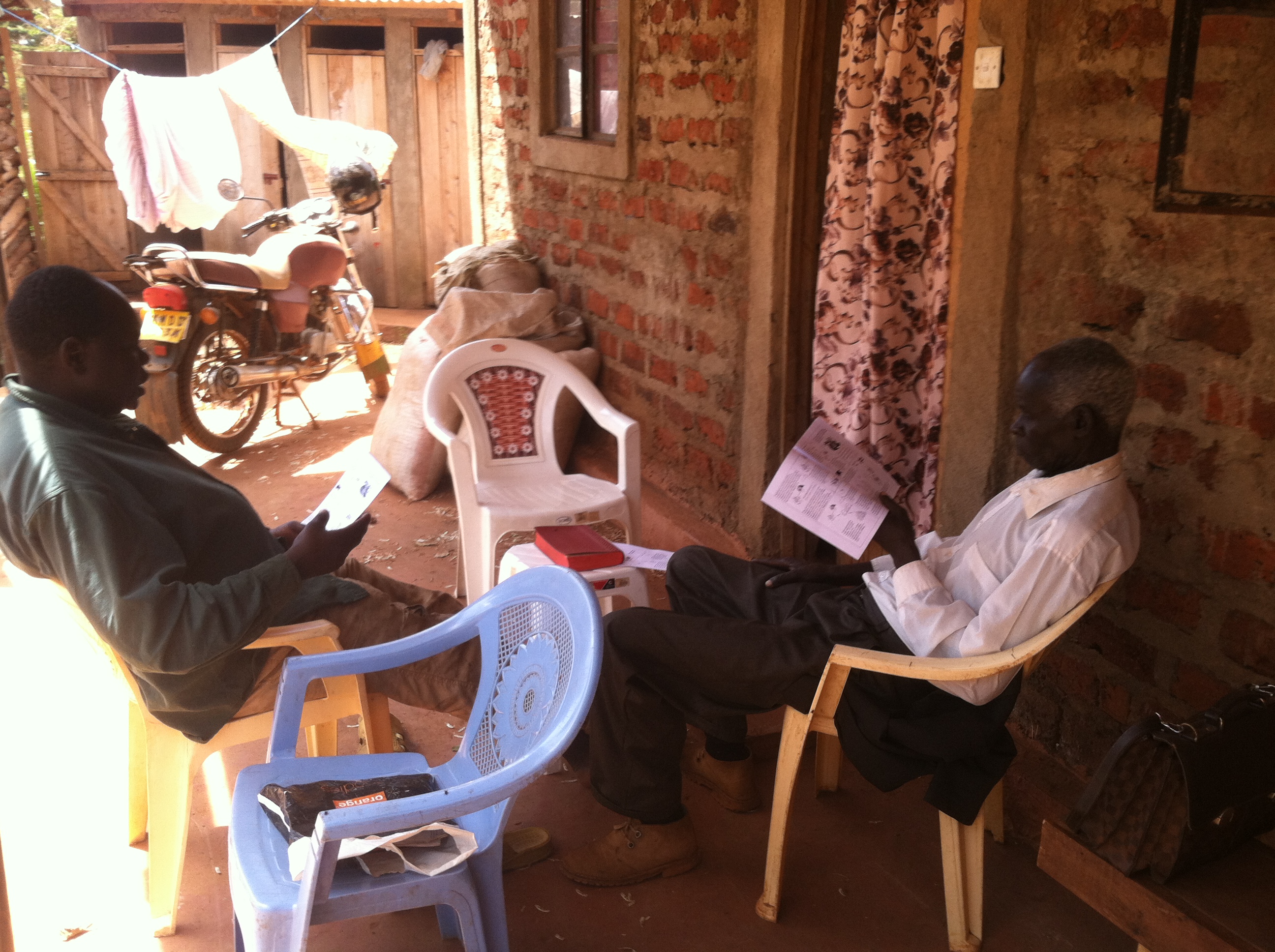
The Sunday service was packed, so we met outside. We had about 50 people (including children), from our village “mother church”  and our sister churches in Matunda/Milele, Birunda, and Naitiri. With the cost of transport being an issue, we didn’t have any visitors from our fellowships farther away. However, the testimonies were very encouraging, and all the brethren enjoyed seeing people from the other fellowships. Our friend, Silas, had a great teaching-turned-dramatization about what a “ransom” is, and why Jesus died on the cross.
The meal was amazing, and plates were piled high with food. An 18 month-old boy ate about as much as I did! Our children (the wazungu kids!) don’t eat quite like their African counterparts, so they came back with lots of leftovers on their plates. It seemed a waste, but we just couldn’t communicate well enough that the servers really needed to downsize A LOT. Marc struggled to find a bucket, thinking it would at least serve a purpose as pig slop, but the woman sitting next to me said, “Just give it to the children outside!” Keep in mind, the KDM building is the site of the village water pump, so there are always people around–mostly children, since Moms usually send them when water is needed for the household.

Of course, in America, most people don’t eat other people’s “seconds,” and I didn’t want to insult anyone, so I said, “You’re sure they will take it?” She said, “Of course!” And sure enough, there were some very happy kids out front who ate what was left on all the plates we brought out.

Praise the Lord, a great time was had by all. We are so blessed to continually celebrate Jesus with our brethren here in Kenya.


Financial Resources and the Work of the Ministry

Working within an organization such as Kingdom Driven Ministries has posed some challenges as we walk out the commands of Jesus on the ground. He said to “Go and make disciples,” and “teach them to obey all that [Jesus] commanded.” Well, Jesus asks us to store up treasures in Heaven, not on Earth. He challenged the rich young man to sell his possessions and give to the poor. We read in Acts of the early believers selling what they had and re-distributing the resources to meet existing needs. Jesus said that man’s life does not consist in the abundance of his possessions (Luke 12:15). Yet, as Nik Ripken aptly notes in The Insanity of Obedience,

“We [Westerners] tend to rely on the power of financial resources to accomplish the highest goals and aims of both individual believers and mission organizations.”

It is true that we, in the West, overwhelmingly think of meeting needs in terms of allocating our financial resources. But here at KDM, we have always believed as Ripken implies: an injection of money into a Kingdom mission that is designed to make disciples is actually detrimental to the health of that mission. The Scriptures are clear that many are led astray by their desire for money (1 Timothy 6:10); unfortunately (because of both colonial and missionary history), East Africa has already been corrupted by the influence of outside money and the power that is exerted with its contribution.

Our primary mission is, and always has been, to introduce the authentic Kingdom Gospel and see resulting life transformation in the form of obedience to Jesus. This should naturally result in faithful disciples who make disciples, thereby forming new fellowships of Christ-followers. But because of the color of the missionary’s skin and the association it has with money, many come just seeking assistance. So, as much as possible, we try to separate the mission (which is The Great Commission) from financial assistance.

Jesus said to “let your light shine before men, so that they may see your good works and they should glorify your Father in the heavens” (Matthew 5:16). The Apostle Paul also exhorts in Galatians 6:10, “As we have therefore opportunity, let us do good unto all men, especially unto them who are of the household of faith.” We cannot proliferate a Kingdom mission without also modeling the commands the Scriptures in this regard. Yet, it does create a quandary when such assistance is contrary to disciple-making.

Now that we’ve been on the ground in Kenya for four years, we have settled on a plan of action which seems to facilitate meeting both goals: the Great Commission and the Great Commandment. First, we (Western missionaries) model the teachings of Jesus by personally helping our brothers and sisters in the church and our neighbors in the village. We bandage cuts, give medication off our shelf, and give financially when asked. However, we are careful to articulate that financial gifts are from us personally, in obedience to Jesus’ teaching to “give to those who ask”–it is NOT associated with our church fellowships or the organization of KDM. Sure, there can be some wrong assumptions about that, but we do our best to be clear and to be a good witness in that regard.

When assistance is provided through KDM, we leverage our indigenous discipleship and leaders to actually do the work and stand out front, to minimize the association between the mzungu (white person) and money. We also do not “advertise” Kingdom Driven Ministries as an organization when we do any projects or medical missions work. This is in an attempt to keep people from affiliating with our fellowships out of obligation, or in an attempt to find personal benefit. We are also very careful about the types of projects we take on and the work we commit to in the community. Some of this has been learned the hard way, by trying to assist (particularly with microloan/gifts for businesses) and seeing the negative outcomes that have resulted in pretty much every case.

We at KDM appreciate the partnership of our donors, and we hope that you appreciate that we try to be good stewards not only of your financial gifts, but also of the health and growth of the Kingdom mission here. In addition to your giving for “the least of these,” please also pray for the medical needs, for the poor, for the malnourished, for those suffering with HIV, and especially for the discipleship and emerging leadership who will soon be responsible for the next generation of believers in East Africa. We praise God for all he has done and will continue to do through our partnership with faraway brothers and sisters in Christ who care deeply about the mission here on the other side of the world.

“This is the Way we Wash our Clothes…”

In many parts of the world men and women are assigned specific duties and responsibilities, according to their gender roles. Life is duty and duty is part of our daily life. We have various tasks that are a permanent part of our “to-do” list; they can’t be neglected or there will be consequences! Domestic duties are a focal point for every healthy family, no matter what part of the globe you live on. And what duty in more delightful than laundry? Doing laundry is the way to cleanliness and cleanliness is second to godliness! Of course, here in Kenya, the process is slightly different than in the West.

019In Western countries, laundry  is typically done in specific rooms or places set apart for the task–like the “laundry room.” Washing is not usually a big deal, due to the availability of washing machines and even dryers. But in our small villages the task of washing is a bit more arduous and requires a significant investment of time and effort.

This work is typically regarded as a feminine role and unsuitable for men. In the past few years, however, this notion has been undergoing changes in some places, as both men and women are now cooperating in putting bread on the table, leaving men with no excuse for shunning the task. Sometimes these families will hire a day laborer to do wash if they do not do it themselves. Laundry washers are paid based on the number of  family members; if the family has many children it implies that many clothes are to be washed, and the more the clothes, the higher the wage.

In families where the man is a bread-winner, the task of laundry is relegated solely to the woman who remains behind to take care of the house and children. In past days, laundry was done in rivers and other water courses, allowing the dirt and stains on clothes to be carried away by the water. This is still practiced in many villages of Africa and Asia. Washing in this way makes laundry easier and faster for the village dwellers; they don’t have to fetch water for washing, and they can use the rocks that are already there. Clothes are rubbed, twisted and slapped against the rocks, making it easier to remove the dirt and stains with little strain and pain. Sometimes wooden clubs could be applied to help in beating out of the garments. In regions where rivers and water courses are not available, laundry is done using plastic basins or metal cauldrons.

Various chemical detergents are used in laundry, such as solid soaps, liquid soaps and powder soaps, based on the financial ability of the family. Most villages families use solid and powder soaps to do washing, due to their availability and affordability. Here in Kenya the common soaps are: Jamaa bar soap, Ushindi bar soap, Sunlight washing soap, Omo powder, Toss washing powder and many other brands of soaps. These are available at local dukas (shops), since they are regularly used. However, in contrast to Western practices, very small quantities are purchased (about 10 or 20 grams, a single-use measure) rather than bulk quantities. At 5 or 10 shillings per packet, families usually buy only what they need–this might be all the extra money they have.

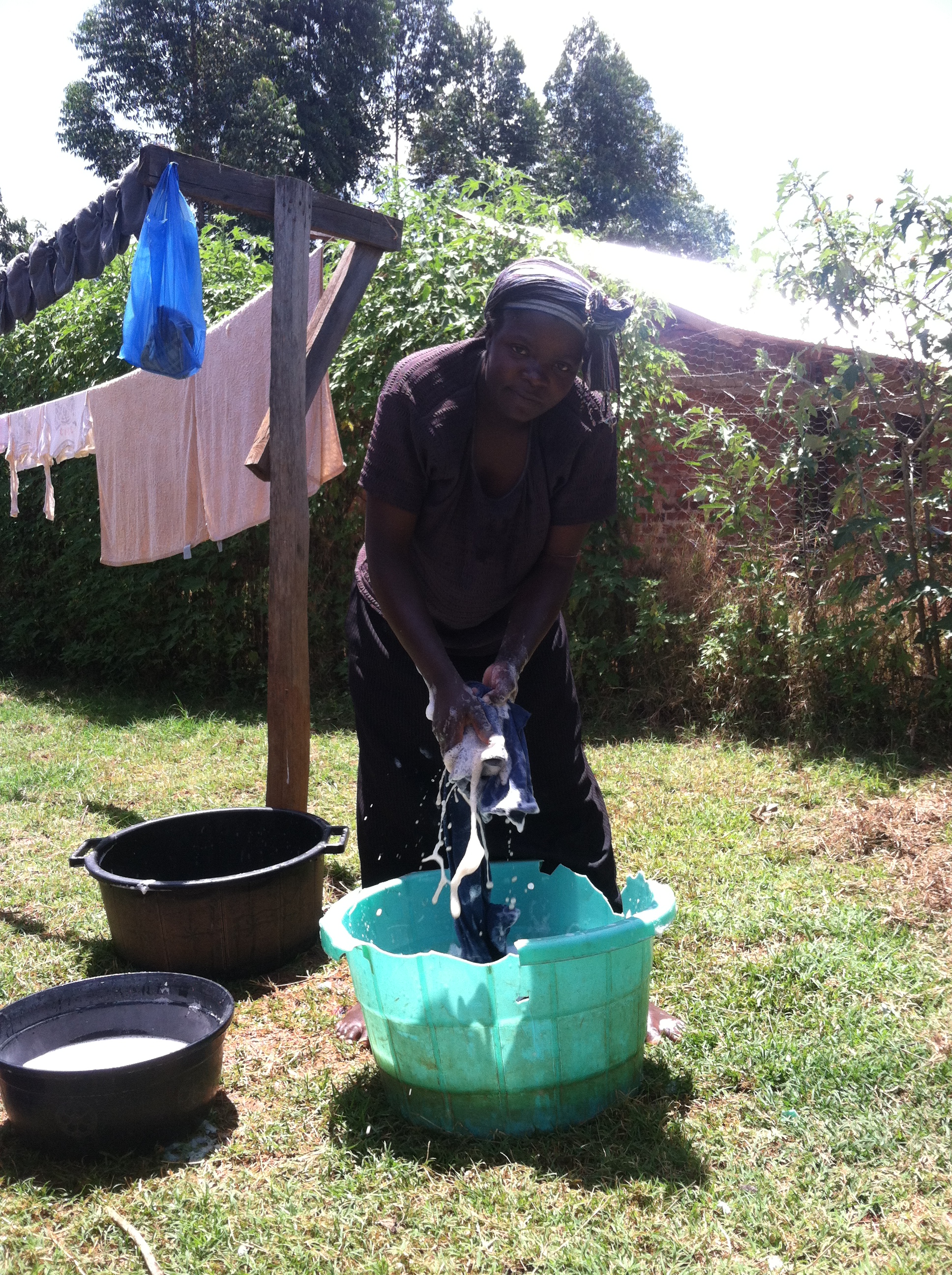
If using a basin, clothes are rubbed on themselves to remove simple stains; a brush may be used for more ground-in stains. Even if washing powder is used, bar soap is usually applied to stains for added cleaning power. Once the linens and clothes are clean and well rinsed, they are twisted firmly to remove most of the water. Then they are hung up on poles or clotheslines to dry, or spread out on clean grass or along hedges.

022

021

In many slums here in Kenya, the population is disproportionately widows and orphans, who often are unemployed and unqualified for high-paying jobs, due to lack of school education. Their only hope and way of making a living may be to do wash for the “rich folks.” Based on the size and number of the family members, their wages are typically 200 to 500 Ksh ($2 to $5) per day. A village employee may receive less than that.

024

There you have it: another look at Kenya village life. Laundry is just one of the tasks that here, as in the West, is an unavoidable part of everyday life.

A Church Servant

Unfortunately, some people believe that their standing before the Lord is determined by their power and influence, that their worthiness in the Kingdom of God is a result of their titles and positions, or that their greatness in the Kingdom of God is determined by their huge estates and wealth. They must perish the thought, that is not true. Our Mzee Timothy Sitati, a deacon and an elder in the church, understands the concept of greatness from a very different angle. Indeed, he understands it based on Jesus’ point of view.

An argument started among the disciples as to which of them would be the greatest, Jesus, knowing their thoughts, took a little child and had him stand by his side. Then he said to them, ” Whoever welcomes this little child in my name welcomes me; and whoever welcomes me welcomes the one who sent me. For he who is least among you all-he is the GREATEST.” (Luke 9:46)

016Mzee Timothy is not a perfect man, but he is a blameless soul: sober-minded, a man of one wife and household that fears and loves the Lord, a man to hang around with and learn from. His mode of life and simplicity is unequaled and unattainable by many elders  in our circle of local churches and community in general. His love and adoration of God is very evident in his commitment and service to the church and the needy.

Before he discovered the secret of the Kingdom he was a committed and faithful member of the Salvation Army church. Two years ago, he met with a disciple-maker and teacher of the Kingdom gospel, Marc Carrier, who shared with him the gospel of Christ. He yielded to the message and accepted to be baptized in many waters after the process of confession and repentance. This was a very new and unique experience for him. In his old church, baptism was nothing but passing under a special church flag. But that was not what Christ taught, rather he was conforming to the teaching and traditions of men.

Jesus answered, ” Most assuredly, I say to you, unless one is born of water and the Spirit, he cannot enter the kingdom of God” ( John 3:5)

Years have gone by since he entered the Kingdom, and the fruits of the Kingdom have steadily emerged in abundance for all to see and partake. Mzee Timothy is a man with many responsibilities and duties both at his home, church and community as a whole. Being a retired school master, many people regularly seek his advice and counsel, but these days his total focus, allegiance, and commitment is to the Kingdom of God and service to the church.

007

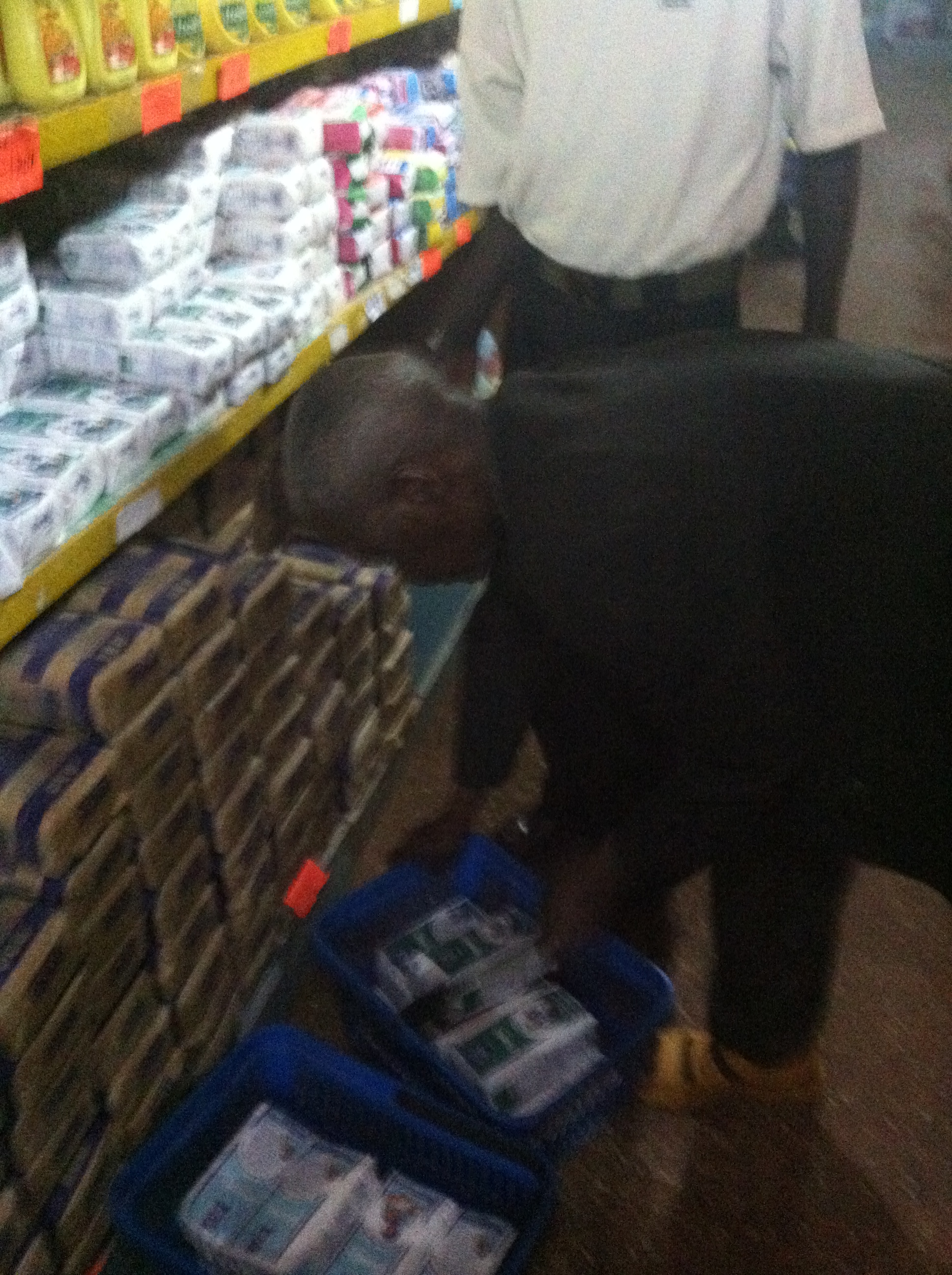
Mzee Timothy shopping for malnourished children


010

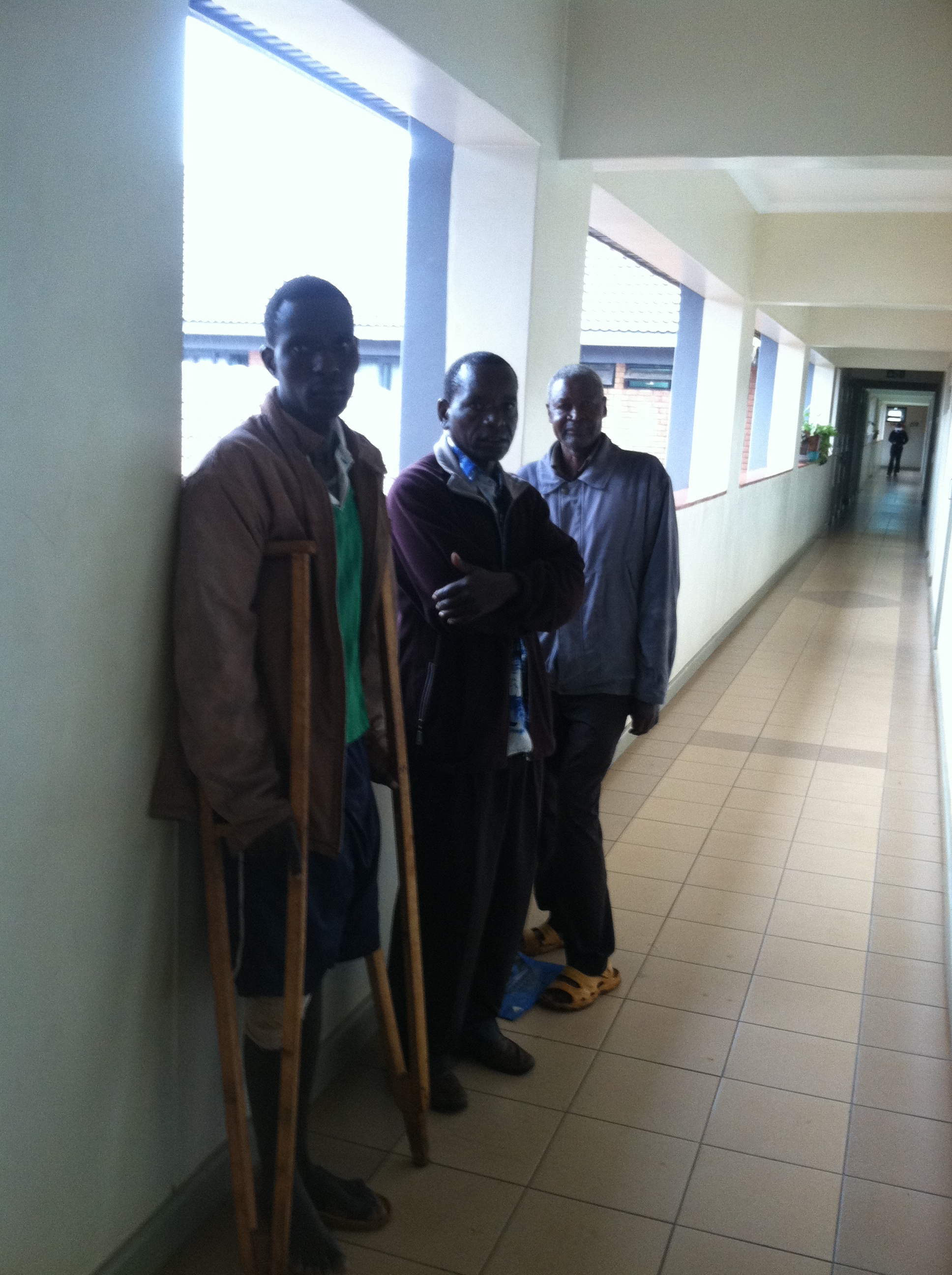
At Eldoret Hospital with Micah


After many days of preparation and discipleship, Mzee Timothy was officially ordained and appointed to take the position of a deacon. This ordination was organized and approved by elders and leaders of the church. Surely none could ever imagine that Mzee Timothy was capable enough to take the office of deacon considering his age and the demands and responsibilities attached with the office. But as the ancients taught, “wisdom is with the gray hair.” He has not only met the expectations but has performed all his tasks excellently and perfectly.

Here’s what you will find Mzee Timothy doing on any given day:

  • Supervising and taking care of premises where the Kingdom Driven Ministries office is located. This includes collecting monthly rent for those who pay it, noting repairs that need to be made and organizing for the work to be done, and generally keeping peace.
  • Maintaining and supervising the community water pump, which is located right outside the KDM building.
  • Managing KDM’s publicly available library of materials, and ensuring that the evangelists and teachers have access to teachings materials and literature.
  • Maintaining the prayer and meeting room, to ensure that the room is clean and in order before any meeting.
  • Overseeing the entire malnourished food program: purchasing food, packing and distributing, and taking all the children and their caregivers to the hospital’s nutritionist on a monthly basis.
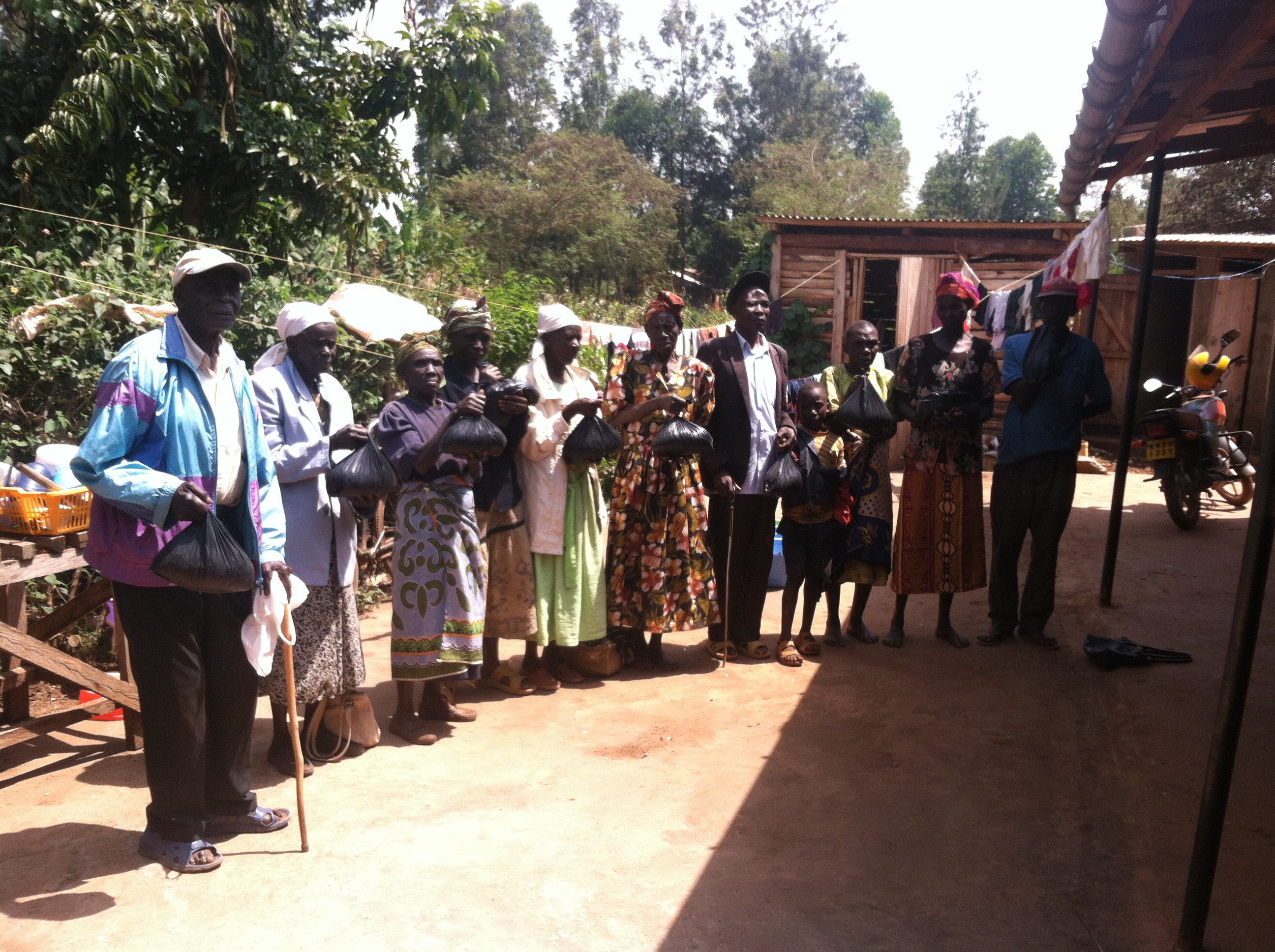
  • Distributing food (typically maize) to the widows and the poor and keeping proper records. (Being a local, he is very familiar with the struggling families.)
  • To the patients with minor sickness, malaria, flu and headache, he is always ready to give pain killer and other medicines that we keep on the shelf. For those with more serious problems, he organizes with local medical health centers for their treatment.
  • He manages funds for malnourished, medical patients, and mission needs.
  • He helps in dealing with church discipline issues and solving disputes among brethren, along with our group of wazee.
  • As a church deacon, he initiates special collections for needs among the brethren that are brought to his attention.
  • Currently he helps Victor Simiyu (a brother with cancer) to manage and budget his food funds and take his medicines properly, and offers him fatherly guidance and support.
  • He visits the HIV/AIDS patients and ensures they don’t fail to collect their transport to go to the government health center for medicines.

053

Mzee Timothy with malnourished family at Matunda Hospital


108

Distributing food to the widows and poor


028

Washing the saints’ feet


Mzee Timothy has been a great blessing to the ministry and the Kingdom of God. He has been a great help to the missionary Marc Carrier, as he has relieved him from all these labors, which initially were all performed by Marc or others in the ministry. He is a great blessing to those that he ministers to and serves everyday. He is truly a light to the community. Let us always remember Mzee Timothy and other faithful servants in their work of service to God and men; remember them in you prayers and supplications.

 Mzee Timothy was faithfully serving in many of these areas before his ordination in our fellowship. Because, as a deacon, he has taken on many tasks related to the administration of KDM’s service programs, he is receiving a small salary for his full-time labor  from the KDM general fund. This is just one example of how your financial gifts are used within the ministry. God bless you!


Medical Updates: Victor and Micah

Our gratitude is beyond words’ expression, due to poverty of languages. We cannot express perfectly our thankfulness for all our brothers, sisters, donors and well-wishers who have stood with us in our great mission to expand the Kingdom of God and to meet the needs of the people we minister to and serve. Cooperation is the essence of genuine comradeship, therefore we are grateful for all our comrades who have selflessly cooperated with us in assisting least of these; in this case, Victor Simiyu and Micah Juma.

018Victor Simiyu, a young man in our fellowship and a cancer patient, was re-admitted earlier this year for the second time in Mulago Hospital, Kampala, Uganda, for more and deeper radiation treatment. After earlier operations, he was found with Fibro sarcoma of the anterior chest wall. Thus, on his return to Mulago Hospital, he was carefully planned for radical radio therapy; tangential fields were used in order to save the critical organs and sensitive tissues. Since his return from Kampala, slowly the chest growth is decreasing020, and recently it has started to rot and fall off. Though this is a disturbing image, it represents the work of God, and we praise Him! Victor was further referred back to a Kenyan special surgeon for more evaluations and check ups. Little was done other than re-dressing the wound and providing some non-narcotic pain medications. As Victor prepares to return to Uganda later this month (March 28), for another follow-up, please keep him in prayer. Doctors treat, but God heals.


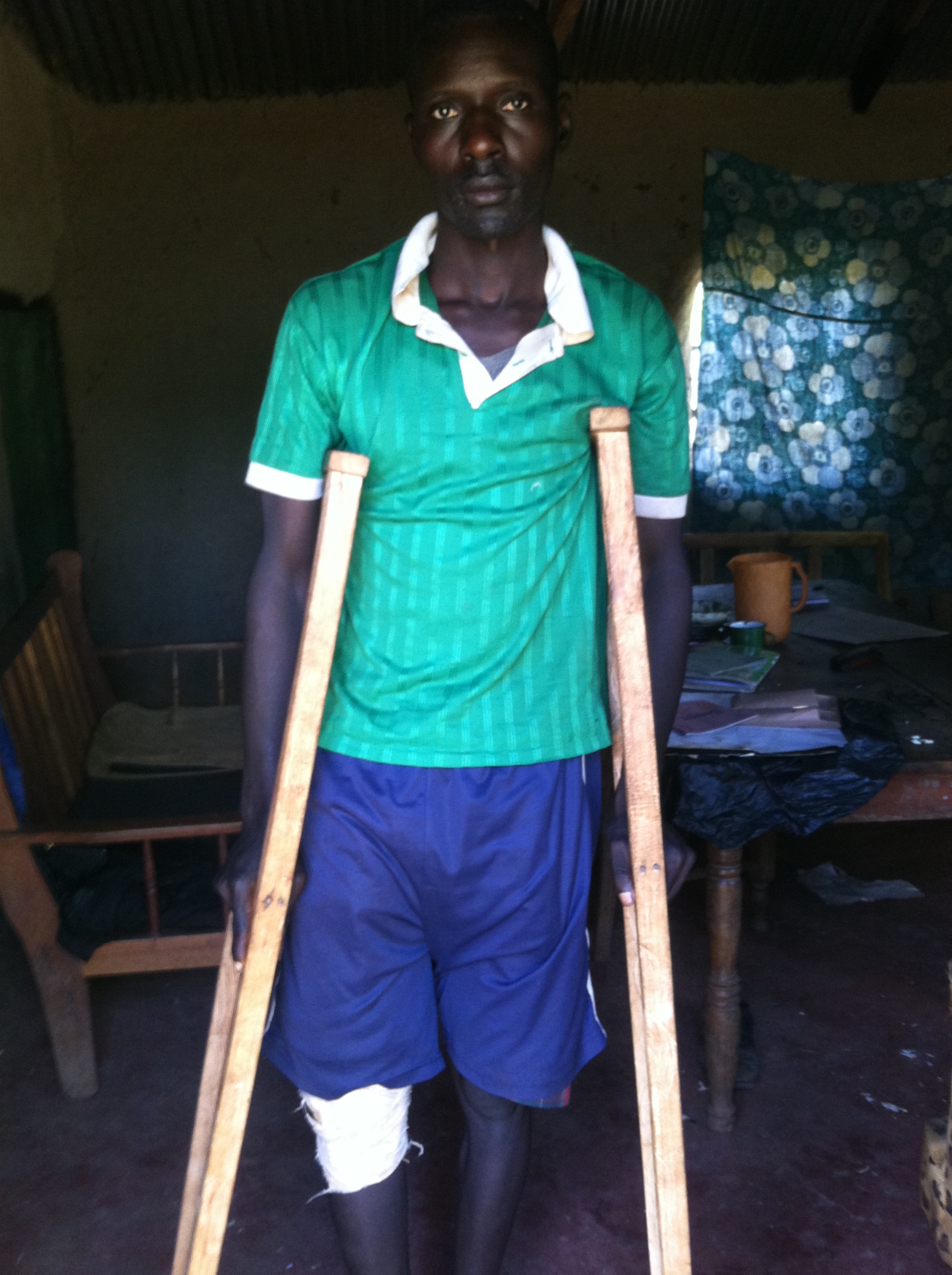
069Micah Juma had been using a catheter following a December 2011 road accident. He also had untreated breakage of his backbone and legs. Earlier this month (March 9),we took him to Eldoret Hospital for supra pubic catheter replacement and recommended knee surgery. We also inquired about the possibility of surgically repairing the urethral damage. His treatments and operations have been temporarily put on hold until April 5, his next scheduled appointment. This delay is to allow him to go through a rigorous antibiotic regimen designed to eliminate the infection his is currently suffering, and give his body enough time and strength to prepare for the surgery. Keep Micah in prayers as he prepares for these big next steps!


True wealth is investing yourself in that which yields the greatest benefits for yourself and others, storing your treasures in Heaven. God bless ALL of you, for your donations and especially for your prayers.

Pure and Undefiled Religion: Meet Loise Anita

In our previous post  Putting a Face on the HIV/AIDS Tragedy in Rural Africa, we briefly highlighted the impact and tragedy of the epidermic to the community in general, especially to the children.

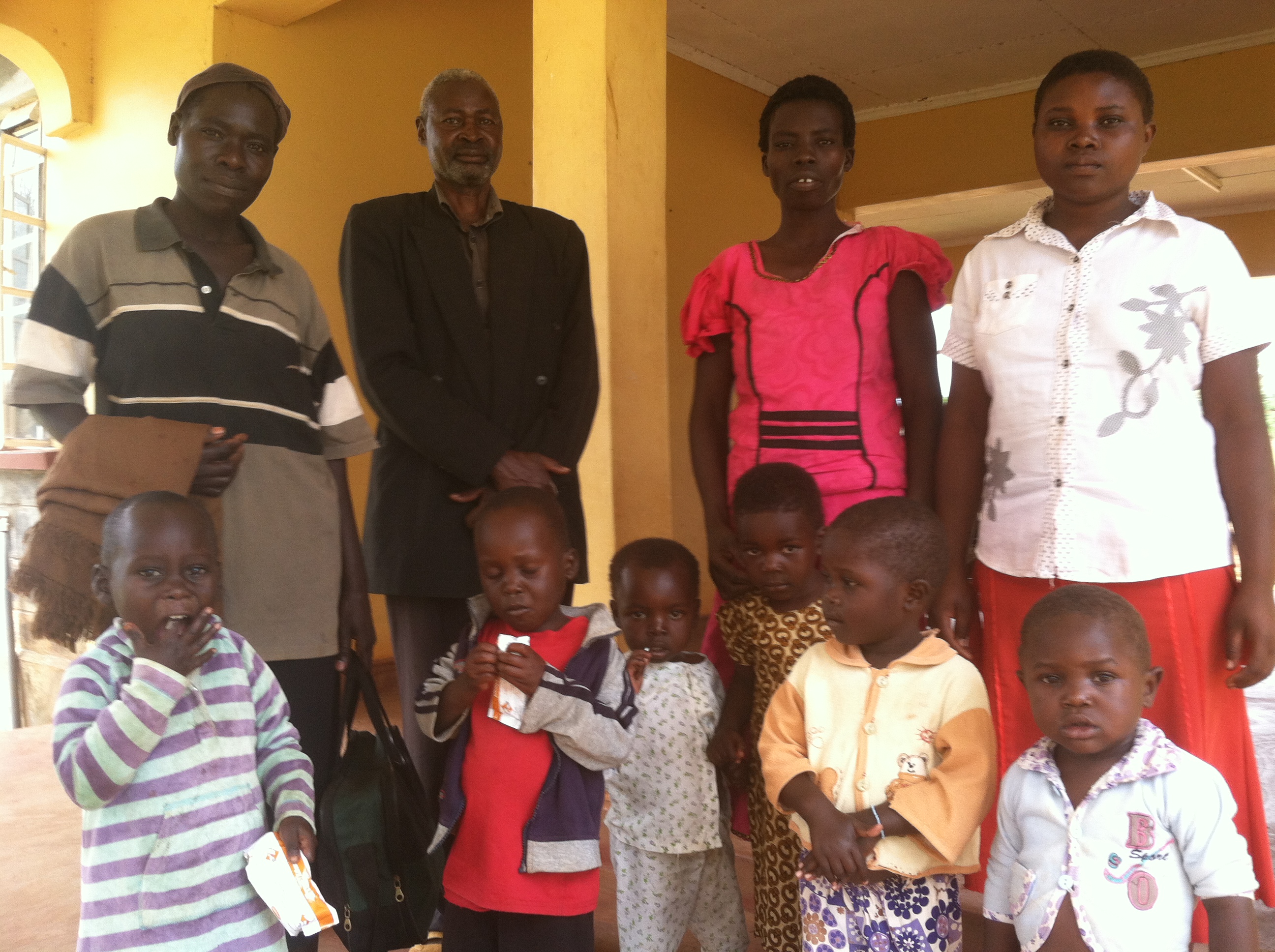
018Loise Anita, 4 years, is one of the children living with HIV/AIDS in our community. Her parents both died due to HIV and left her under the care of the grandmother, who is a widow. A specific food program was recommended for her by a local government health officer. However, her grandmother cannot provide the special diet needed to keep her strong and healthy, due to the financial pressures of raising Loise alongside of other young children in the home, on her limited means. This situation is a difficult one for little Anita, whose physical growth and  mental development is under threat of compromise.

How much we yearn to help and support this family, especially the children! Currently we don’t have an established food program for families of HIV patients as we do for the malnourished children, yet the needs are just as pressing. We are looking forward to establishing something for these families too, if the Lord will grant us the grace and resources to do so. For a time, we are incorporating Anita into our existing malnourished food program; however, that program is already at its maximum for the funding we’ve received. To help her (according to the health department’s recommendations) and keep the existing program going will cost approximately $40 per month. Not only would we love to help Anita, but other families affected by HIV, whom we are currently assisting in other ways.

” Pure and undefiled religion in the sight of our God and Father is this: to visit orphans and widows in the their distress, and to keep oneself unstained by the world” said James the Righteous. Join the Kingdom Driven family and help Loise Anita! Help us to create a circle of life with strong hopes for the orphans and widows. Make a father and mother for Anita; be the hands and feet of Jesus.

016

Peace and blessing unto ALL souls.

Village Life : Brick Making

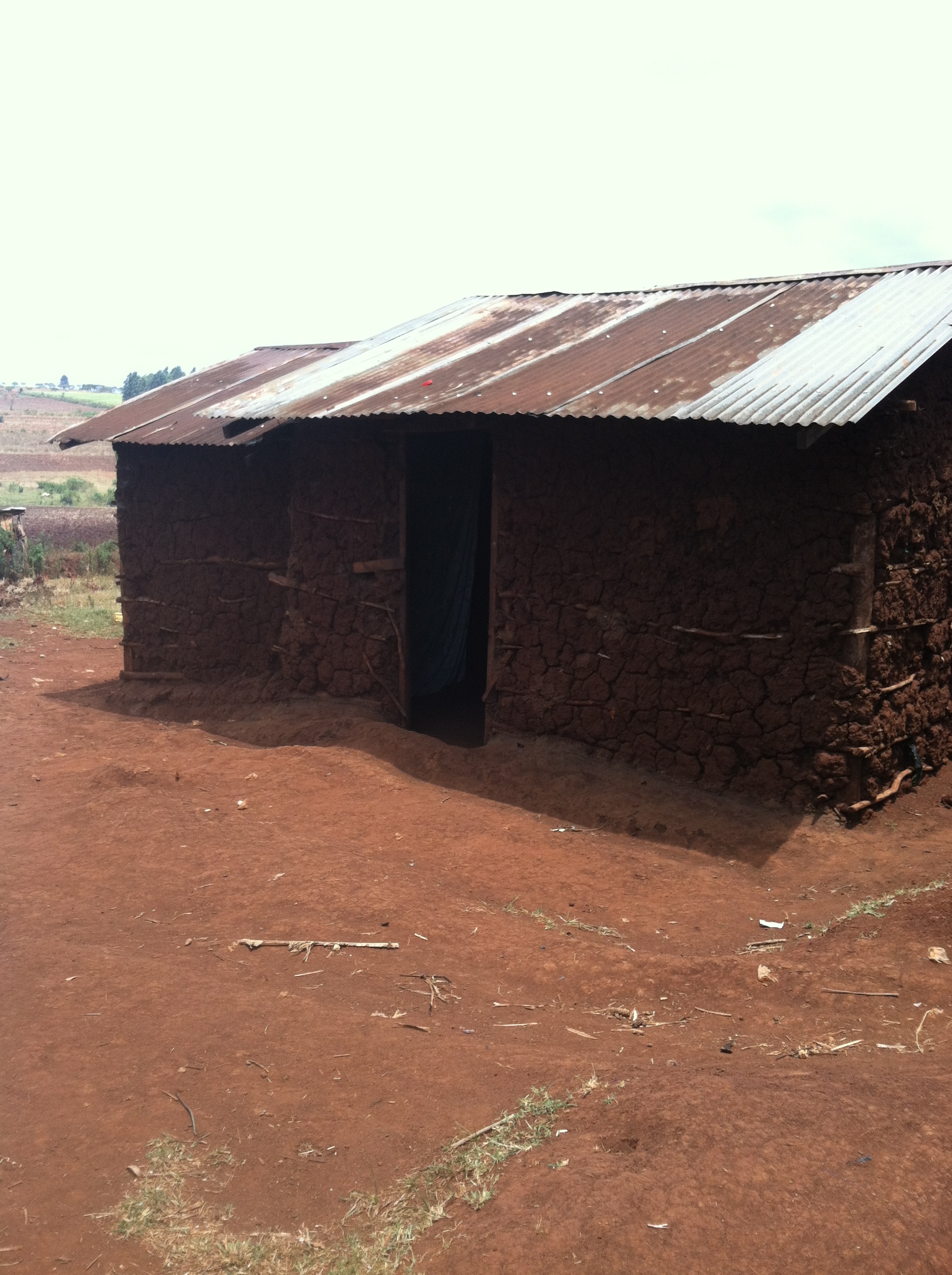
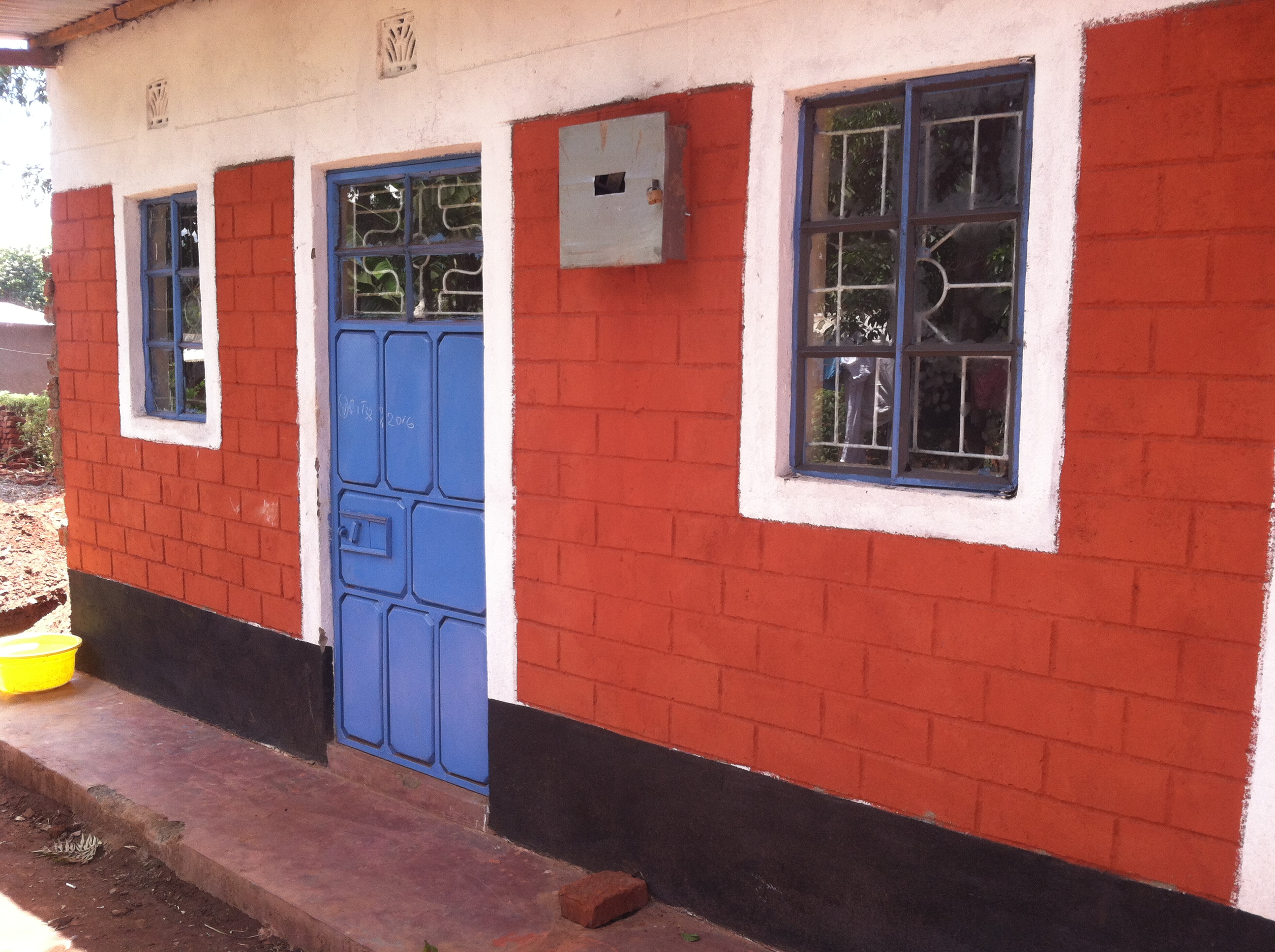
Traditional mud house
A modern brick house

As time marches on, also the wheels of human development continue to turn. Human beings, despite their differences in geography, race, traditions, and ideology, all share something in common: a deeper longing and desire to improve and better ourselves as one race–the human race.

Evidence of our evolution (in terms of constant growth) is visible everywhere: skyscrapers, technological advancement, scientific discoveries. This modernization, particularly over recent decades, is mind-blowing. As we celebrate all these great successes in knowledge and industry, let us celebrate the seemingly humble brick-making industry in the developing villages of Africa, especially here in Kenya. Indeed, here it is a great leap of evolution to see how many families in villages are moving from mud houses into permanent brick houses.

For about the last twenty years, brick making has been viewed as one of most rapidly-growing industries in Kenya. In fact, it is one of the most reliable sources of income to many families who own infertile and agriculturally-defective lands. It is also a source of self-employment for folks with little or no formal education. There are two main catalysts for this growth: the emergence of a middle class, which is driving the demand for better and more permanent houses; and a shortage of employment opportunities among young people.

In its early stages, brick-making was viewed by many educated people as an occupation for poor and illiterate folks. But with time, and the reality of the scarcity of job opportunities, this perception has undergone a dramatic metamorphosis. Shortage of employment opportunities in the big cities and towns has forced many educated and strong young people to return to their villages and venture into the brick making industry, therefore utilizing their infertile and unproductive lands.

In comparison to agricultural use of land, one advantage of brick-making is that it can be undertaken at any season of the year. However, many brick makers prefer to fire their bricks during dry seasons, as finding dry wood during a rainy season can be challenging.

Materials required for brick making are easily obtainable, as they are natural resources:

  •  Clay or loam soil
  • Laborers (5 men can make 1000 bricks)
  • Dry wood (4,000 KSH–approximately $40–can make 5000 bricks)
  • Water
  • Brick-shaping box

The process of brick making:

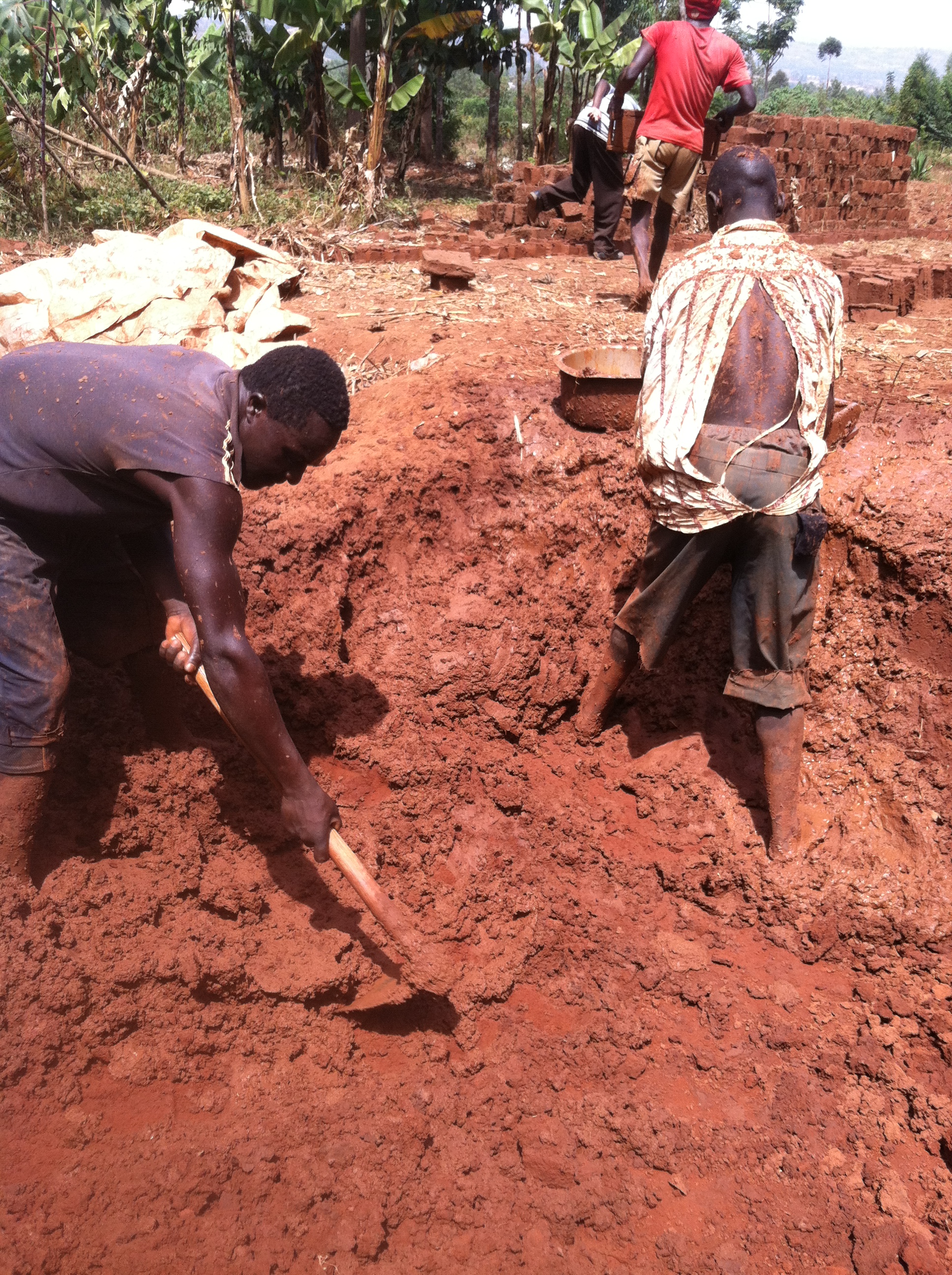
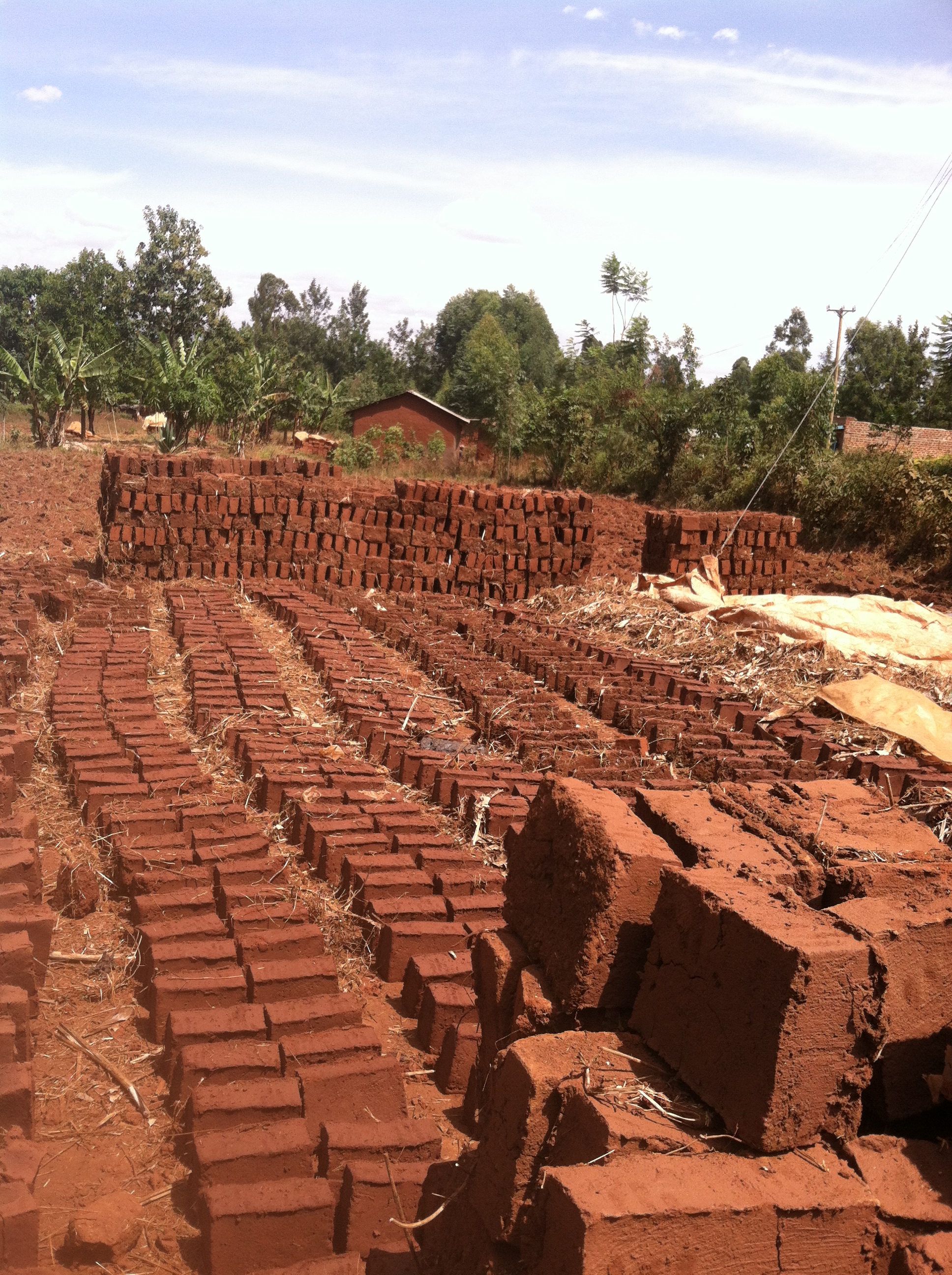
Digging the soil, crushing, and mixing soil and water. This takes about two weeks’ time.


016

Molding, laying and drying, takes about one week in dry season.

018

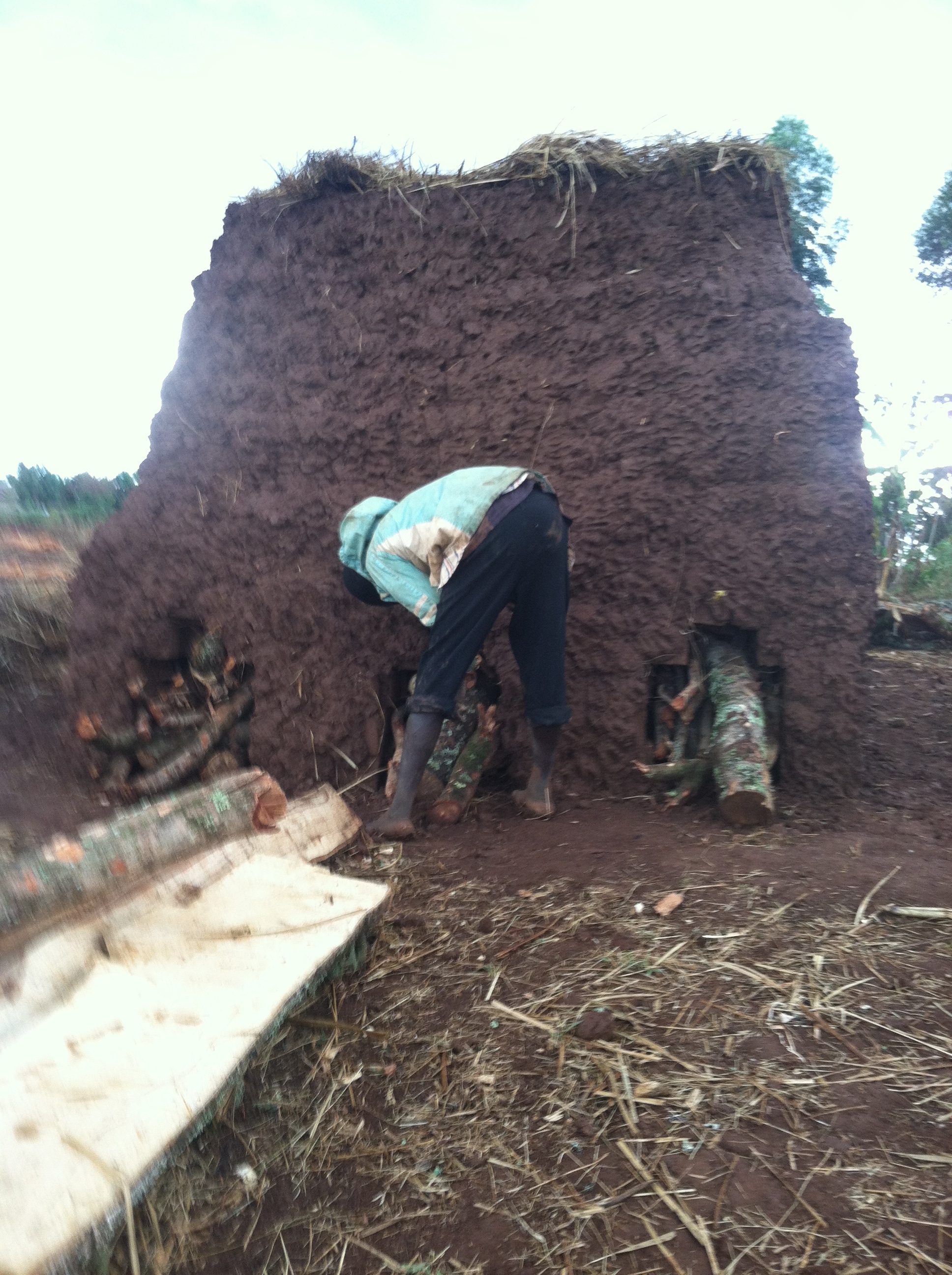
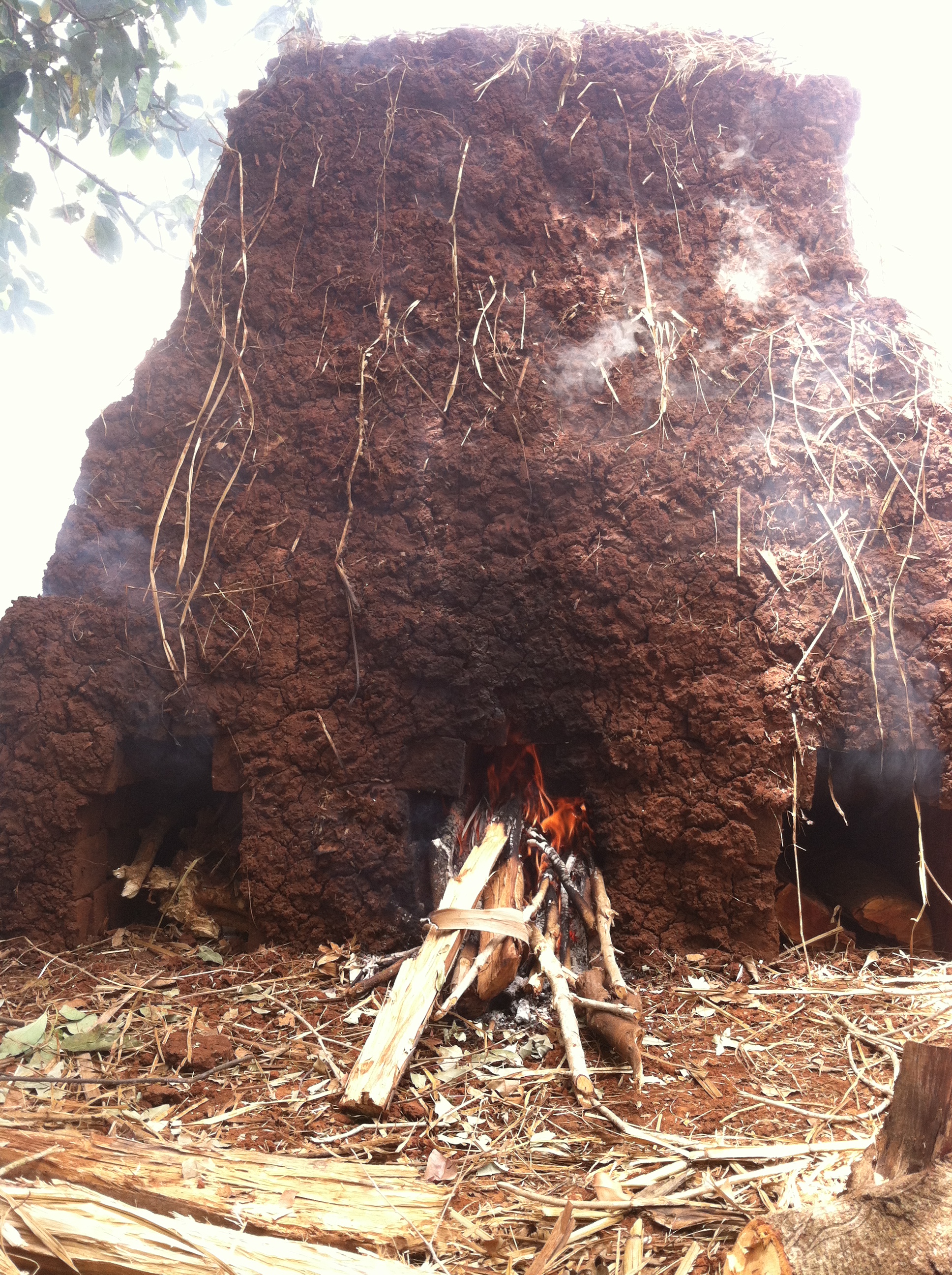
Cooking of the bricks takes one full day and night. In the photos, you can see that the bricks are stacked and covered with mud to create their own insulated oven. During the dry season, when brick-firing is most common, you will see many columns of smoke continually rising over rural places; at night, the bonfire rising from the heart of the brick pile is truly beautiful.

037

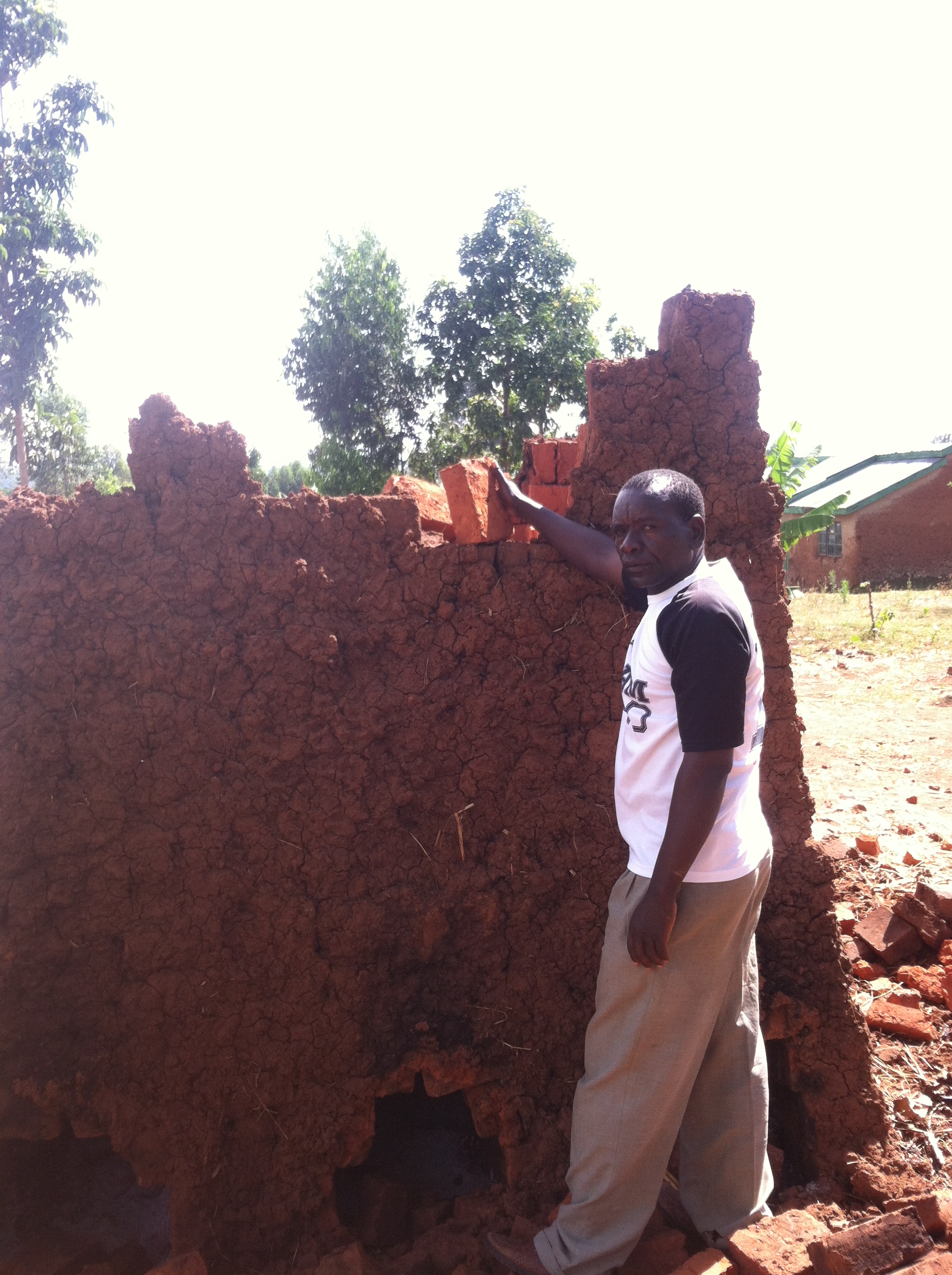
057Final examination and stacking/packaging of the bricks is the last phase of brick-making

010

011

At last the bricks are very much ready for marketing and building. During dry seasons, one brick will be sold for 5 KSH, while in rainy seasons the price will go up to 7 KSH. The brick-making industry has transformed thousand of lives in many of the villages of Kenya. It has placed food on the table, provided clothes for many families, educated many children and above all restored the usefulness of the infertile and unproductive lands.

013

003

Leadership Development

One of the greatest achievements of any leader is the ability to impart successfully the gifts that God has given to them, to other people. A good leader also has a desire to share the accumulated knowledge they have gathered over many years of learning. It is not just enough to have men and women following after you, but to make many men and women capable of continuing on in your work–this is a mark of a true leadership. This is what Jesus Christ did many year ago with his disciples: he created men who would carry on his mission. He imparted his spiritual gifts and knowledge to the twelve men he walked with.

From the onset, the greatest mission of Kingdom Driven Ministries had been to produce and create men and women who can lead themselves, their families, and their communities in living and manifesting Kingdom life. Our goal was, and still is, to equip and prepare men and women for the roles of leadership. Though the Carriers and Glenn Roseberry have done the initial work of bringing the message of the Kingdom to East Africa, the goal has always been to raise up  indigenous leaders who will be even more effective in sharing that message with their own people.

In our local fellowships we have been abundantly blessed with many wise and good old and young men. Men of strong integrity and solid faith in the Lord Jesus Christ. But does it mean that any good man can be a leader? Or does it imply that every wise man can take the role of leadership?  We learn from Paul’s letter to Titus that there are attributes and special qualification to be considered before we appoint elders who are the future leaders of the church. Leadership is a gift from God, and it is only He who appoints and anoints leaders.

For two to three years we have been seeking the will of God through prayers to reveal to us who are the men He has prepared for this great responsibility of leading and feeding His flock here in East Africa. It has not been an easy task to identify these men, considering the great numbers of wazee (“old men”) who are continually added to our fellowships. It is wisdom to be patient and wait for God’s time. His time is always the best and His ways are not our ways, nor His thought our thoughts.

Missionary Marc Carrier has not only been a teacher of the Kingdom Gospel and a discipleship trainer, but has also been identifying men with leadership qualities who have the ability and the gifting to carry on the work of the Kingdom. Despite all the challenges and difficulties encountered in this endeavor, the Lord has been faithful and our strong support along the whole journey. Now the sweet fruits of the hard and bitter toil is emerging slowly like a corn seed will sprout from the dark ground after many days of struggling under the soil.

For any effective preparation and development of leaders to occur, there must be an extensive work on teaching and disciplining to be undertaken. For months and years, Marc has been leading various weekly and monthly leadership training and discipleship meetings and classes, especially for teachers and evangelists. The efforts invested were not in vain. Recently we have witnessed rising and emerging of leaders in different fields: teachers of the Word, evangelists and deacons. Some of these leaders have been recognized by the church and officially ordained.

Identifying and training first generation leaders was challenging due to cultural and language barriers. There were seminars and classes, yes, however, the real discipleship occurred in the field while doing the work of ministry. The prevailing method of Model, Assist, Watch and Let do (MAWL) was limited by the need for translation. Yet, this impediment to organic indigenous leadership development has now been removed as the first generation of leaders has taken on the responsibility of training subsequent generations of leaders.

Among them is Lazarus Lordia, a teacher, evangelist, and the leader of Bidii house church (learn more about him from our previous article, Father to the Fatherless), and Nashon Ouma, teacher, evangelist and pioneering missionary in Uganda  (learn more about him from our previous article, Young Evengelists in Uganda). Also, Silas Khaemba, a teacher, evangelist and deacon, (learn more about him from our previous article, Putting a Face on the HIV/AIDS Tragedy in Rural Africa) and Mzee Timothy, an elder and deacon (learn more about his ministry our previous article, The Lord’s Treasures). These men and indigenous leaders have been fully trained and equipped in the great work of service. Currently they are the ones who are training and preparing others for the roles of leadership and responsibility for the church through weekly classes including drill and practice, providing a consistent life example and on the job training. We praise the Lord that numerous prospective leaders are now in queue.

013

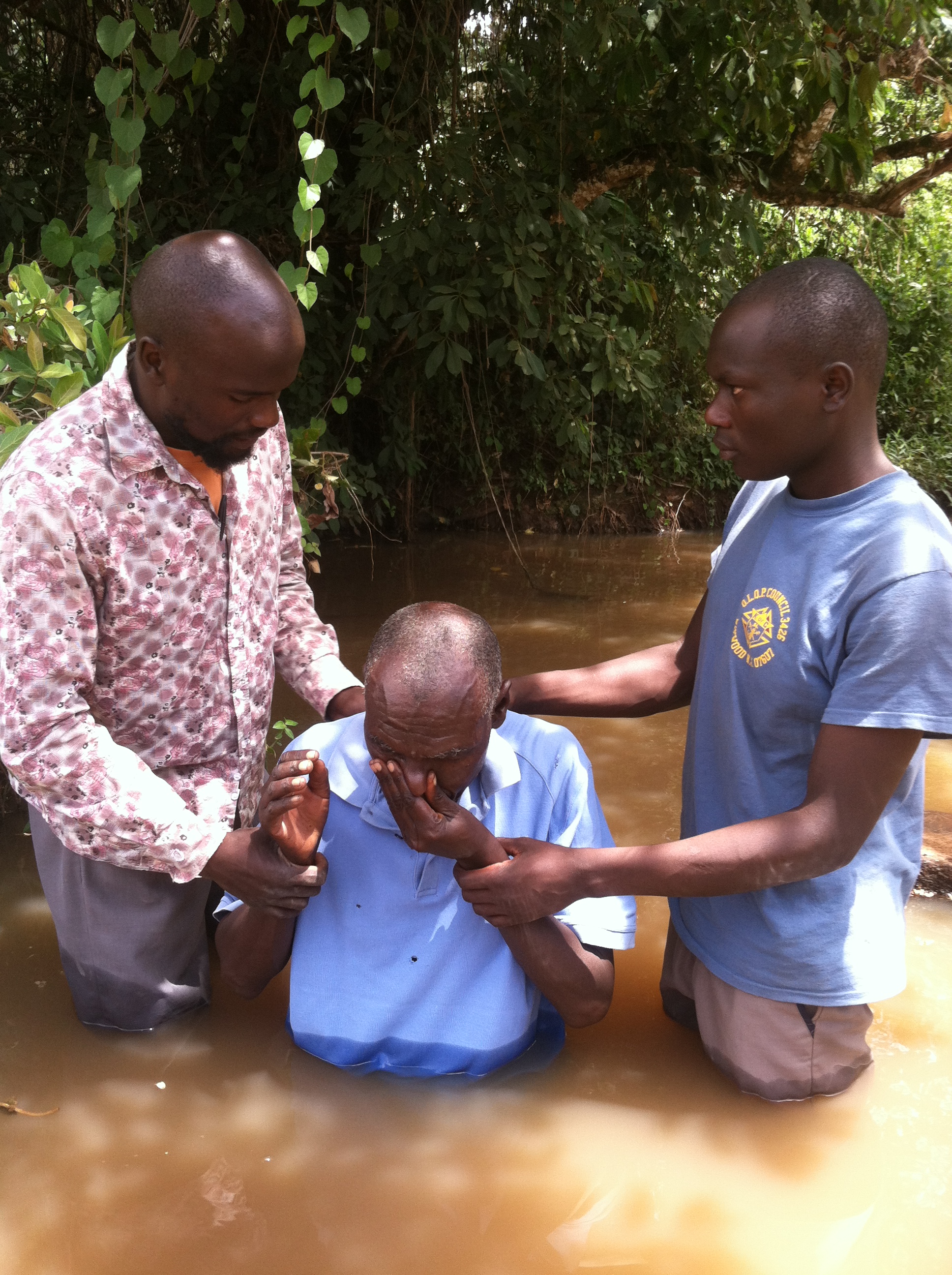
Nashon and Lazarus,
baptizing a former Muslim man.


005

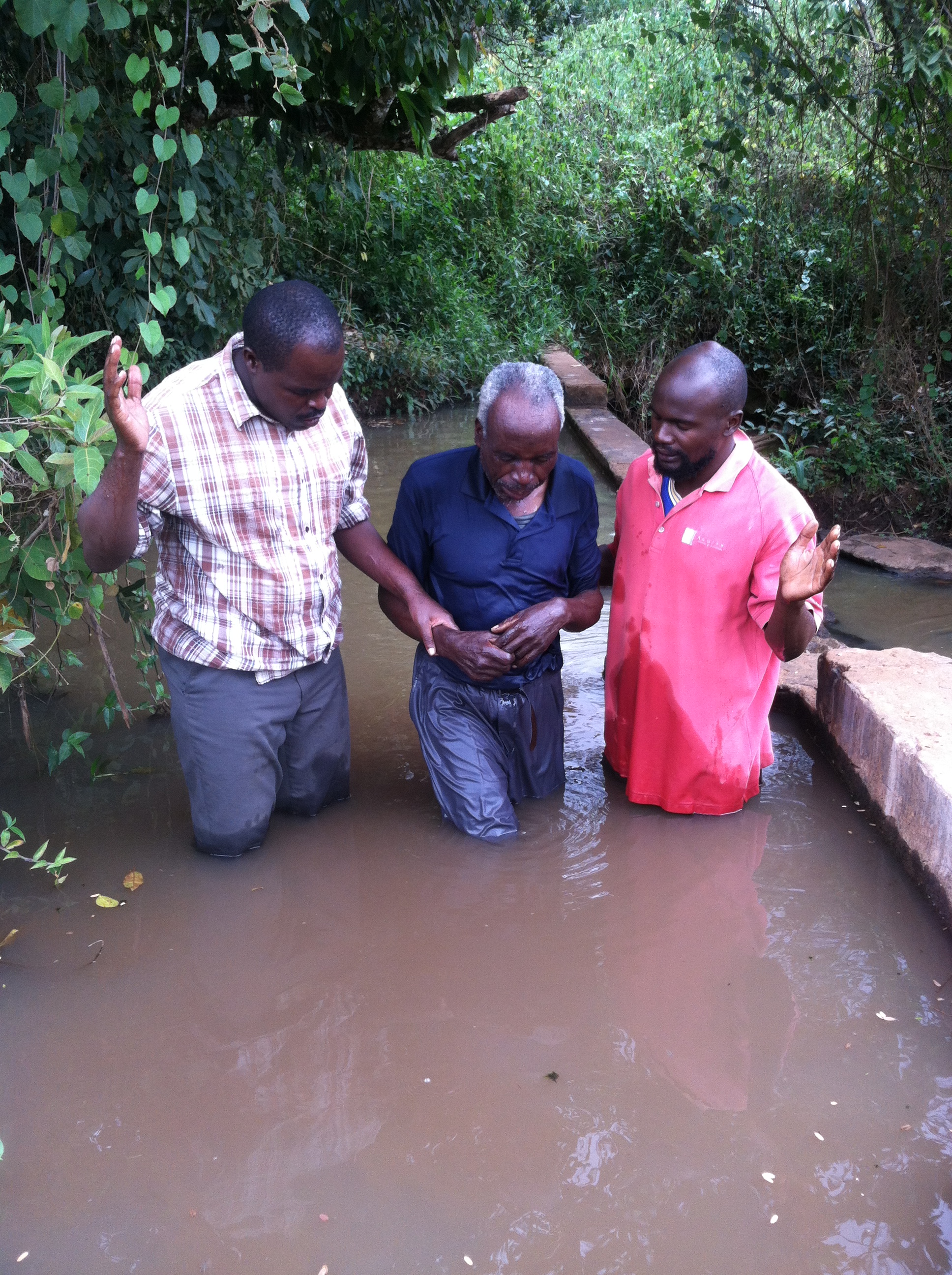
Lazarus and Wafula,
baptizing together after teaching


010

Mzee Timothy with Micah Juma
at Eldoret Hospital for medical procedures


023


Young Silas (right) leading wazee in weekly evangelism training

005007

Wazee practicing their presentation of “The Two Kingdoms,” two by two


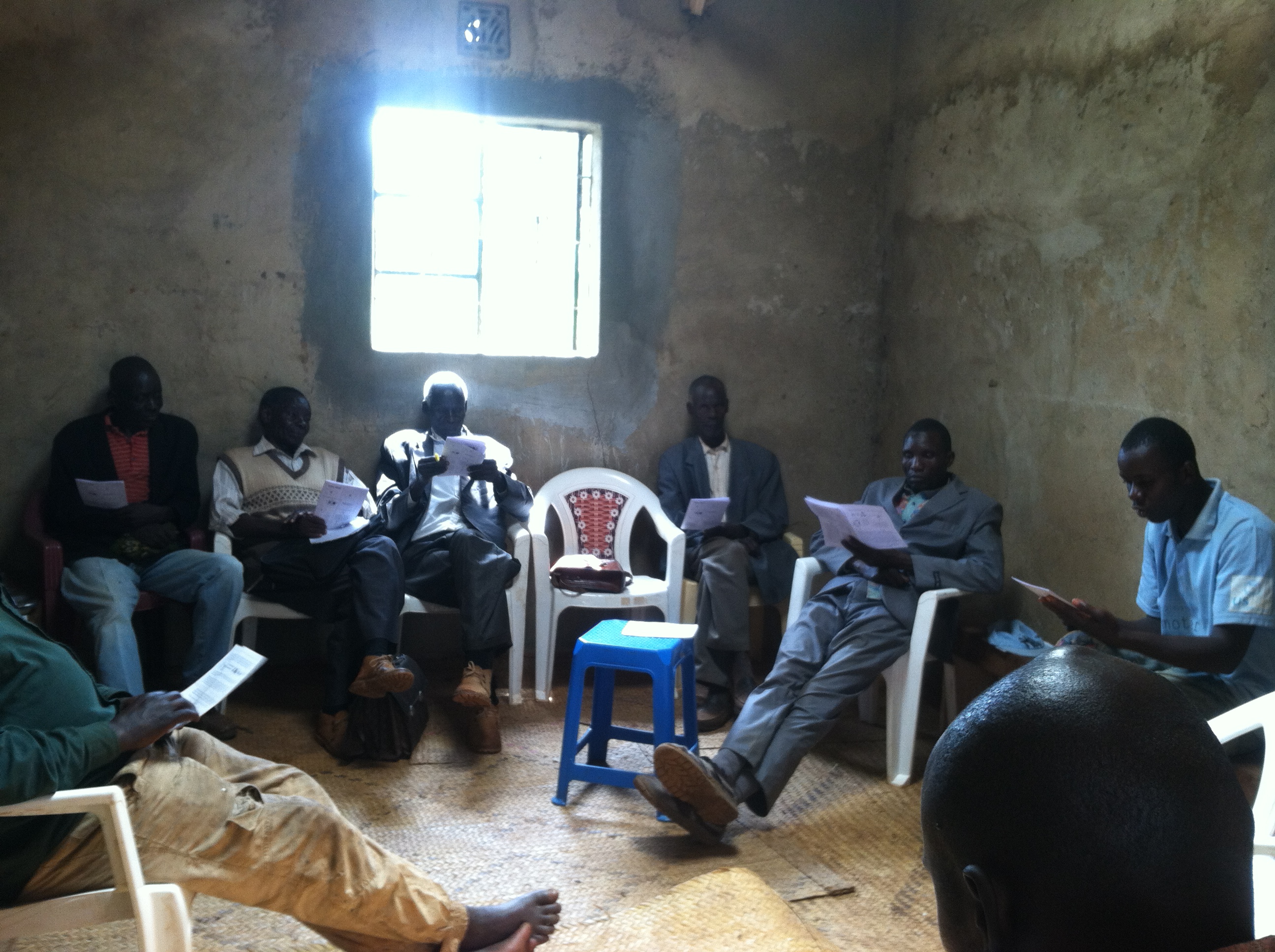
There is also an ongoing discipleship and training with wazee during their weekly Tuesdays meetings and fellowship, where they are guided through Bible Study lessons and discoveries of the Kingdom. These meetings also provide a solid ground for unification and oneness among the brothers. Here also, disputes and church discipline issues are brought up and discussed as needed. We praise God for His continual guidance in the slow and steady process of discipleship, and for those He has clearly gifted for the tasks of evangelism, teaching, and oversight of our existing fellowships. We ask for your prayers as we continue to invest in leadership development and look forward to transitioning our local fellowships to indigenous leadership and self-governance.

002


Wazee weekly meeting

Seasonal Changes

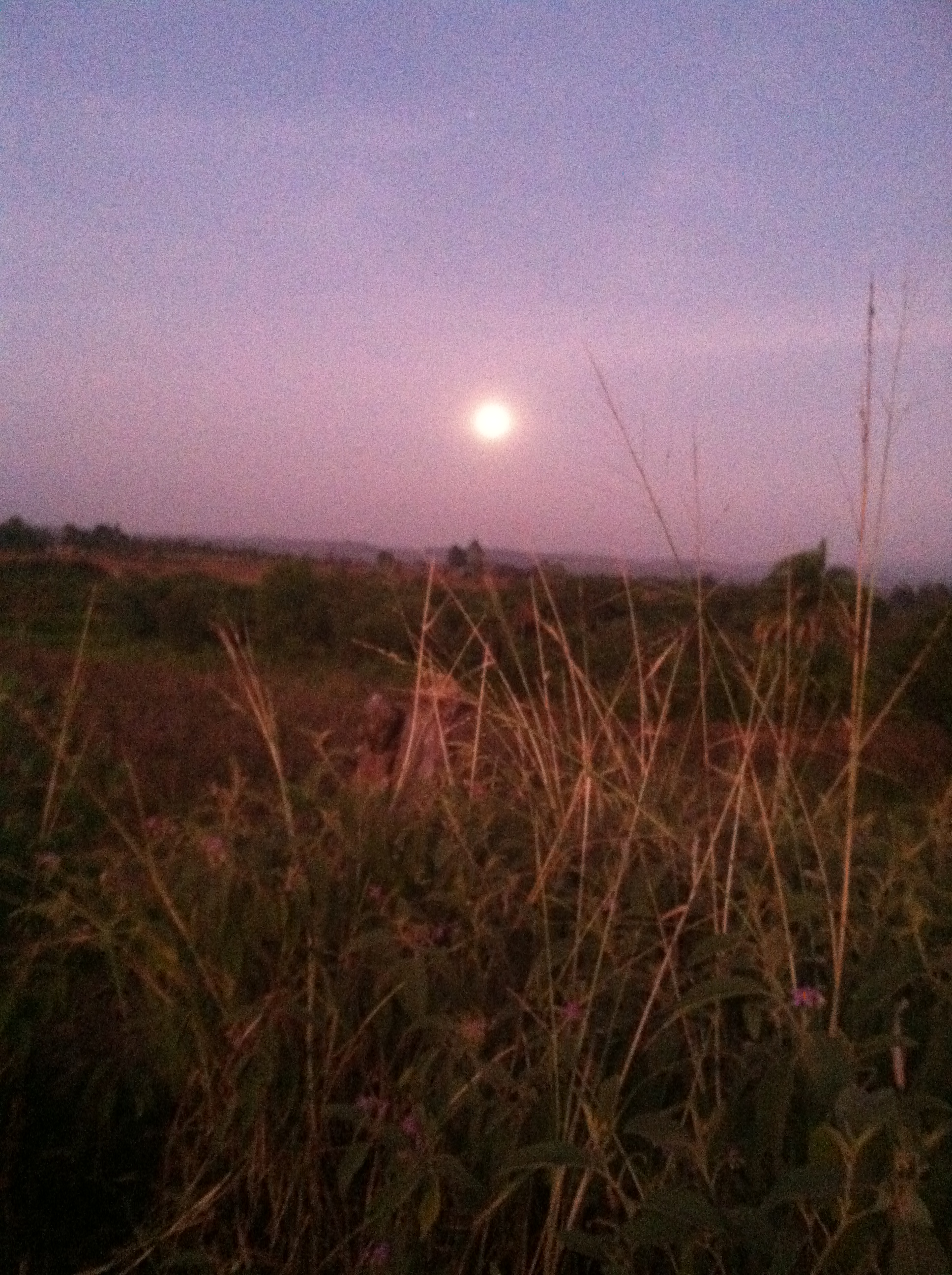
  004 Then God said, “Let there be lights in the firmament of the heavens to divide the day from the night; and let006 them be for signs and seasons, and for days and years; and let them be for lights in the firmament of the heavens to give lights on the earth.” (Genesis 1:14-15)

What a great calamity for humanity, that many men and women will pass through this life without gaining full knowledge of the mysterious creation over their heads! Living as if life was a disturbing dream, so eager to avoid it. Many will behold the morning sun and exclaim, ”What a beautiful  and mystical sight is the sun!,” while some will whisper, “Truly the moon is the splendor and beauty of heaven’s sky.” But beyond these simple expressions of appreciation and recognition, very few people will bother to understand why they exist; what are the main purposes for the luminaries, and why did the Lord God established them?

We learn from the Book Genesis that God didn’t create these heavenly bodies just for the sheer beauty and decoration of the sky, nor only to give man a spectacular sight to behold. He made them for higher reasons and a greater purpose.  One of the higher reasons was to give man knowledge and understanding of  signs and seasons, specifically, to enable him to prepare his land. In fact, the English word “season”  is derived from the French saison, meaning “to sow.”

When is the last time you went outside to look at the stars at night? How often do you meditate on the wonder of God’s creation at the signs of the seasons? It seems to me that this generation is more out-of-touch with these ancient phenomena then its predecessors. Yet because of their dependence on the earth for sustenance, the ancients before us have had tremendous knowledge and understanding of such things. For example, the ancient Egyptians were well-versed in heavenly observance;  they waited for the right time of sowing and harvesting. They discovered that the star (Sirius) preceded the flooding of River Nile; to them, this was the sign of a new planting season. The ancient Hebrews, no doubt, had great knowledge of seasonal changes as well. Jesus’ parable refers to this:

Then He also said to the multitudes, ” Whenever you see a cloud rising out of the west, immediately you say, ‘ A shower is coming’; and so it is. And when you see the south wind blow, you say, ‘There will be hot weather’; and there is. Hypocrites! You can discern the face of the sky and of the earth, but how is it you do not discern this time?” ( Luke 12:54)

Unlike other parts of the world that experience four full seasons of the year,  many parts of Africa, the Middle East, and Asia experience only two distinct phenomena:  dry and rainy seasons. In our area, we experience two rainy seasons. “Long rains” are during the months of April, May and early June. “Short rains” are for just a few weeks in November and December. After the season of short rains follows a long, dry season from mid-December to March.

Now is the time of year in our area when every farmer is busy preparing their fields for planting season, as the signs of long, rainy season are at hand.  People employ different ways and systems of cultivating lands. Rich folks will hire big tractors, what we might call the “middle class” will employ oxen, and  the poorest will have to plow with a jembe in hand.

After tIMG_1391 - Copyhe preparation the heavy rain will be here, and most farmers will plant their maize seeds. Corn takes almost 6 to 7 months before it is harvested. The right time for corn harvesting is during the short rainy season, November -December. Until then we pray for God’s blessing as farmers are committing themselves to His mercy in this life-sustaining occupation.


Heaven sings! Heaven sings!
yet man can’t see,
Heaven sings! Heaven sings!
yet man continues to sin.

Why doesn’t man see,
though he has eyes?
Why doesn’t man understand,
though he has senses?

Man is still a fool,
Man is a weary beast.